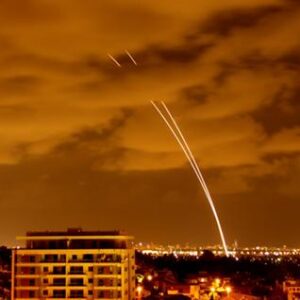
The fading sounds of fighting in the Gaza Strip are sure to give way to the demands for post-war inquiries on issues like the terror tunnels. There is one thing, however, that no one will ask to investigate — the military’s wartime ethics.

The question of wartime morality is perhaps more relevant than anything else, since Israel is now required to fight on the moral “front” with both hands tied behind its back. There are several cases that can be used to illustrate such ethical dilemmas or, to be exact, the question of military conduct in combat situations.
At first light on July 26, 1968, an eight-man terror cell crossed the Jordan Valley into Israel. The cell was discovered by Israeli soldiers who immediately gave chase. At noon that day, Paratroopers Brigade Commander Col. Arik Regev and Capt. Gadi Manela arrived at a hill overlooking the area, and were killed by enemy fire. Innocent-looking women were standing in the entryway to a cave where the terrorists were hiding.
April 2, 2002, saw IDF troops engage terrorists in the Palestinian city of Jenin, as part of Operation Defensive Shield. Roadside bombs forced the troops to fight between and inside the residents’ homes. Then-Defense Minister Binyamin Ben-Eliezer refused to order the Israeli Air Force to bomb the terrorists’ hideouts in the dense urban area, and 13 naval commandos were killed.
During Operation Protective Edge, as battles raged in northern Gaza, Israeli soldiers called for aerial support, but with the terrorists clearly hiding among civilian population, IAF pilots refused to strike the area. The battle raged on and the IDF suffered multiple casualties.
Can it be that the decision to send soldiers into battle, with the aim of protecting civilians, is devoid of the ultimate moral consideration, which states that the lives of Israeli soldiers are more important than the lives of enemy combatants and any civilians in the war zone, since they are not there by chance?
It seems that the moment a politician, a military officer or a commentator raises the issue of wartime ethics during or ahead of the battle, it erodes the state’s promise to protect the lives of its citizens.
What prompts senior military officers, public officials, legalists and education professionals to almost unanimously declare that the innocent must be spared — a sentiment true in and of itself — when the only reasonable answer is an unequivocal statement saying that the lives of Israeli soldiers are preferable to those of enemy civilians?
I believe this is a misperception of morality. If claiming the “higher” moral ground demands we sacrifice soldiers to satisfy an ambiguous ethical demand set by those seeking to see themselves as liberal and enlightened at the expense of a bereaved mother’s anguish, than something here is fundamentally wrong.
In the substantial range of action between indiscriminately bombing heavy populated areas, as they did in World War II, and sacrificing soldiers so to avoid harming enemy civilians, many other options can be found.
The responsibility for civilians staying inside a war zone is their government’s to shoulder, and in Gaza’s case it lies with Hamas. Notifying civilians of a scheduled strike is done voluntarily, meaning that if the military knows that terrorists are hiding inside hospitals or mosques it should have no qualms about bombing those sites and everyone in them, thus substantially reducing the chances of terrorists and patients huddling together in the future.